


As you sort through all the specs out there to find the best drone, there’s one common spec that is frequently touted among many popular, consumer-focused camera drones as a must-have. It’s not a 4K camera, or an obstacle avoidance system (though those are generally also must-haves). The hottest, must-have spec among hobby drones for this year (and likely onward) is that the drone weighs under 250 grams.
A drone that weighs under 250 grams is relevant for reasons far beyond it being easier to transport (though that’s a perk, especially for jet setters who frequently travel with their drones). Perhaps a more-important reason why drones under 250 grams are so popular: many types of federal drone regulations do not apply to drones under 250 grams.
Most notably are the following two:
- Drones under 250 grams do not need to be registered with the FAA for recreational operations.
- Drones under 250 grams do not need to be Remote ID compliant.
And in some countries, drones that weigh under 250 grams may also be able to carry out more ‘complex’ operations that larger drones cannot legally do, such as flying beyond visual line of sight or over people. Note that all drones flying for commercial purposes in the U.S. under Part 107 must be registered.
Some of the most popular drones on the market these days weigh less than 250 grams including the DJI Flip and DJI Mini 4 Pro.
Here’s what you need to know about those rules, and how drones under 250 grams are regulated:
Drones under 250 grams: everything you need to know


You won’t need to register drones under 250 grams with the FAA
Drones that weigh 250 grams or more must be registered with the FAA before you fly them in the U.S. — and that’s whether you’re flying for recreational or professional purposes.
You can register your drone with the FAA here. It’s a relatively simple process that requires you to make an account with the FAA, input some basic, identifying information and pay a fee ($5), good for the following three years. Upon doing that, you’ll receive a registration number, which you must affix somewhere visible on your drone (if you have multiple drones, you can use the same number for all of them).
But if you’re flying a drone for recreational reasons and the drone weighs less than 250 grams, then it does not need to be registered in the U.S.
Not only does that save you $5 and on more piece of paperwork for your to-do list, but it also means you avoid handing over some information to the government, which might be appealing for some pilots.
Your drone does not need to be Remote ID compliant
Perhaps more significant than the registration rules are the Remote ID rules, which went into effect in September 2022.
That rule states that all drones weighing 250 grams or more that are flown in the U.S. must be Remote ID compliant. Again though, drones that weigh less than 250 grams do not need to be Remote ID compliant.
Related read: 249-gram Mavic Mini was designed for safety, DJI says. Sure, but that’s not the whole story.
Other benefits of small drones: safety
Of course, avoiding regulation isn’t the only reason to consider a smaller drone. Most experts agree that smaller drones tend to be safer for a simple reason: the impact generated from a tiny drone is inherently so much smaller than a bigger drone, should it crash. Imagine a 3-year-old punching you versus a 300-pound adult punching you; it’s just not the same.
“This sub-250g weight category was created in 2015, when the U.S. Federal Aviation Administration (FAA) asked a committee of aviation and drone experts to quickly determine the minimum weight of a drone that recreational drone pilots should be required to register,” according to a blog post from DJI. “With personal safety the main goal, the committee employed complex formulas involving kinetic energy and terminal velocity to recommend a weight category of 250 grams and above, which the FAA then adopted.”
The best drones that weigh under 250 grams
DJI wowed the drone industry in February 2020 with the launch of the DJI Mini, which was largely considered to be the first high-quality camera drone weighing under 250 grams. But even that drone’s camera quality paled in comparison to what we have today. The DJI Mini has since evolved into a few iterations, including the most recent addition to the Mini line, the DJI Mini 4 Pro. The Mini 4 Pro is one of DJI’s newest drones (and not surprisingly one of the best drones for photographers).
I’ve put together an extensive guide to the best drones under 250 grams, but you can read the quick version below:
Best overall drone under 250 grams: DJI Mini 4 Pro

The DJI Mini 4 Pro came out in September 2023, blowing its predecessor, the DJI Mini 3 Pro, out of the water. That’s largely due to the addition of omnidirectional obstacle avoidance, which is a critical safety feature that is only more impressive given how much power was added to a tiny drone.
Among the other highlights of the DJI Mini 4 Pro:
- Weighs less than 249 grams
- 4k/60fps, 4k/100fps, Night Mode
- True Vertical Shooting
- ActiveTrack 360°
- 34-minute flight time (or more)
- 20km max transmission
Read our full review of the DJI Mini 4 Pro or read a breakdown of the Mini 3 Pro vs. the Mini 4 Pro.
Best option on a budget: DJI Flip

If you’re looking for an affordable entry into the DJI ecosystem, the DJI Flip offers great value while keeping the price low. And yes, it even makes Drone Girl’s list of overall best drones for photographers in the budget pick category there, too.
Here are some key features on the DJI Flip:
- Weighs less than 249 grams
- 48MP photos with high dynamic range and 4x zoom
- 31 minute flight time
- Foldable propeller guards made from carbon fiber
- 12 m/s of wind speed resistance
While it lacks the advanced obstacle sensing and high-end camera of premium models, the DJI Flip is perfect for vloggers and casual flyers who want an easy-to-use, fun drone. And it’s still pretty powerful, as evidenced through features like 12 m/s of wind speed resistance.
- Order the DJI Flip drone from Amazon, starting at $439
- Order the DJI Flip drone from B&H Photo, starting at $439.
- Order the DJI Flip drone from Drone Nerds, starting at $439.
Other drones in DJI’s lineup that weigh under 250 grams are older models of the DJI Mini lineup, including the DJI Mini 3 Pro, the DJI Mavic Mini, Mini 2, and Mini SE.
You might also consider the DJI Neo, which is mostly an indoor drone (where FAA rules don’t apply). But, it’s especially appealing for newbies given its affordable price point.
Best non-DJI drone under 250 grams: Autel Evo Nano+

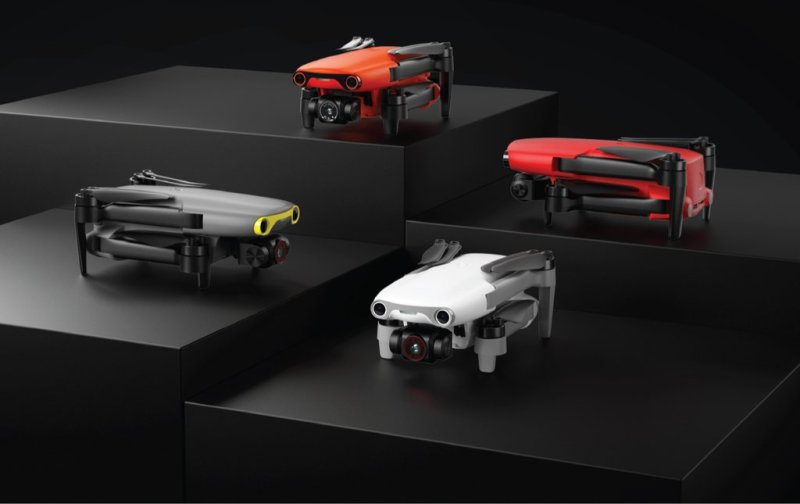
Autel has long created drones that feel like they replicate DJI’s lineup harkening back to the days of the Autel X-Star (which basically looked like a DJI Phantom, but orange). Unsurprisingly, Autel also offers a drone that weighs less than 250 grams called the Autel Evo Nano+.
Some of its key specs are:
- Weighs less than 249 grams
- 1/1.28-inch (0.8-inch) CMOS sensor capable of 50 MP photos
- RYYB color filter array design with a large aperture of f/1.9
- Millisecond autofocus, PDAF + CDAF
- 28 minute flight time
- Obstacle avoidance system
Order the Autel Evo Nano+ drone+ directly from Autel, here.
Can the FAA still regulate drones under 250 grams?
Yes, the FAA can still regulate drones under 250 grams, based on where you’re flying or what you’re flying for.
You can’t say, fly in restricted areas (such as in your own backyard near an airport without other permission) just because your drone is under 250 grams. To fly any drone in a restricted area, you’d need to seek permission from the FAA (the easiest way to do that is through LAANC).
Other rules that restrict flights, such as flying drones beyond visual line of sight or flying over crowds, also apply to drones under 250 grams. And you still must register and adhere to other rules like Remote ID compliance when flying under Part 107 (meaning you’re flying for business), even if you’re flying a sub-250 gram drone.
You are not exempt from FAA rules just because your drone weighs less than 250 grams. However, drones weighing under 250 grams are highly appealing because many FAA regulations simply do not apply.
Flying smaller drones is generally seen as safer than operating larger drones. And by eliminating FAA rules, the process of flying drones loses a lot of friction. With a sub-250 gram drone, you don’t need to worry about whether your drone is Remote ID compliant. You don’t need to stress about how to affix your registration identification number to your drone. And hey, you get to save the $5 registration fee while you’re at it.
This article was sponsored by YOU!
If you want to help cover my web hosting fees (or just want to buy me a cup of coffee to energize my next article), please donate to The Drone Girl on PayPal via the button above!